
#1 top pick

Greek food walking tour in Athens
- ☑ Taste a selection of Greek specialties including koulóuria (sesame bread rings) and loukoumades (Greek donuts)
- ☑ Explore Varvakios Agora with an expert guide and learn about the city’s culinary history
- ☑ Visit specialty food stores to try local produce including wine and organic olive oil
- ☑ This private tour ensures you’ll receive personalized attention from your guide
- ☑ Duration: 3 hours 30 minutes
- ⭐️Rating: 5 out of 5 stars (5010 reviews)
Contents of Beyond the Acropolis: Offbeat Things to See in Athens
Beyond the Acropolis and the obvious tourist circuit, Athens has plenty of off-the-beaten-track experiences waiting to be discovered. Here are a few worth adding to your itinerary.
1. Mount Lycabettus
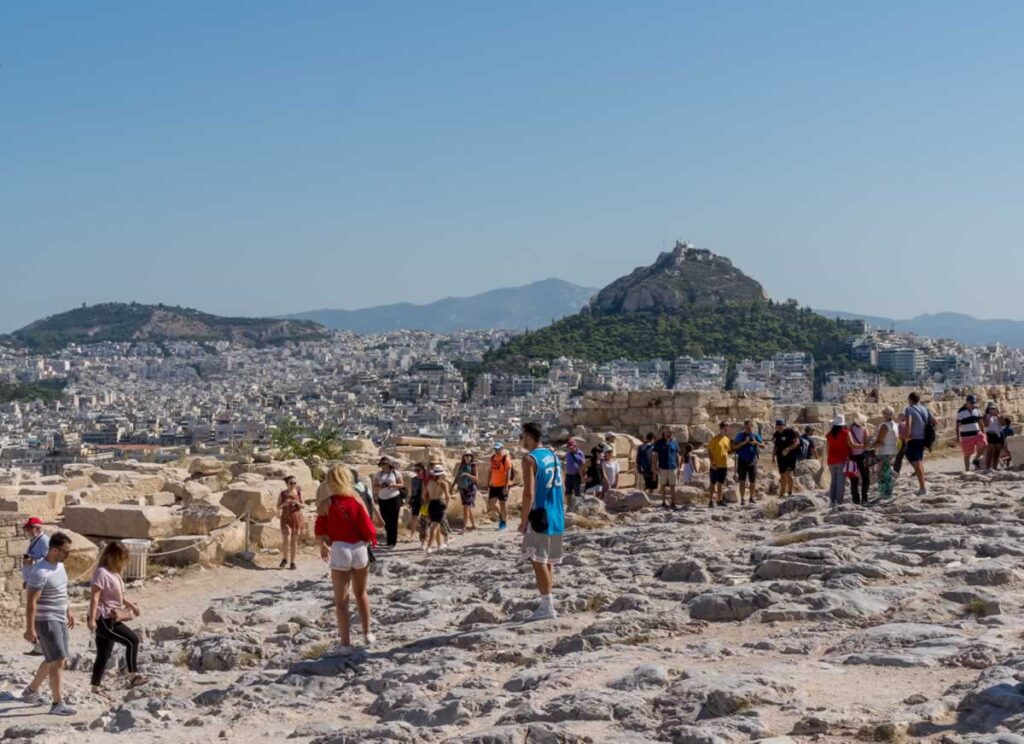
The best reason to climb Mount Lycabettus is the panorama. From the top, Athens spreads out beneath you like a map, with the Acropolis, the coastline, and the surrounding mountains all visible at once.
Arrive about an hour before sunset to make the most of the golden hour light, then stay for the blue hour and into the evening, when the monuments light up across the city.
You have two options for getting to the top: hiking or taking the funicular. The hike is free but steep and tiring in summer heat. The funicular saves your legs and your energy for the walk around the summit.

The main downside is the crowds; sunset on Lycabettus is popular, and the viewing deck at the top fills up fast.

Get there early if you want a good spot for photos. There’s a restaurant on the summit where you can claim a table and wait out the rush. Since most visitors come purely for the view and move on quickly, finding a seat is easier than you’d expect.
2. Odeon of Herodes Atticus
The Odeon of Herodes Atticus is a stone theatre built in 161 AD on the southern slope of the Acropolis, commissioned by the wealthy Roman patron Herodes Atticus in memory of his wife. It originally had a cedar roof and could seat around 5,000 spectators, rather impressive by any era’s standards.
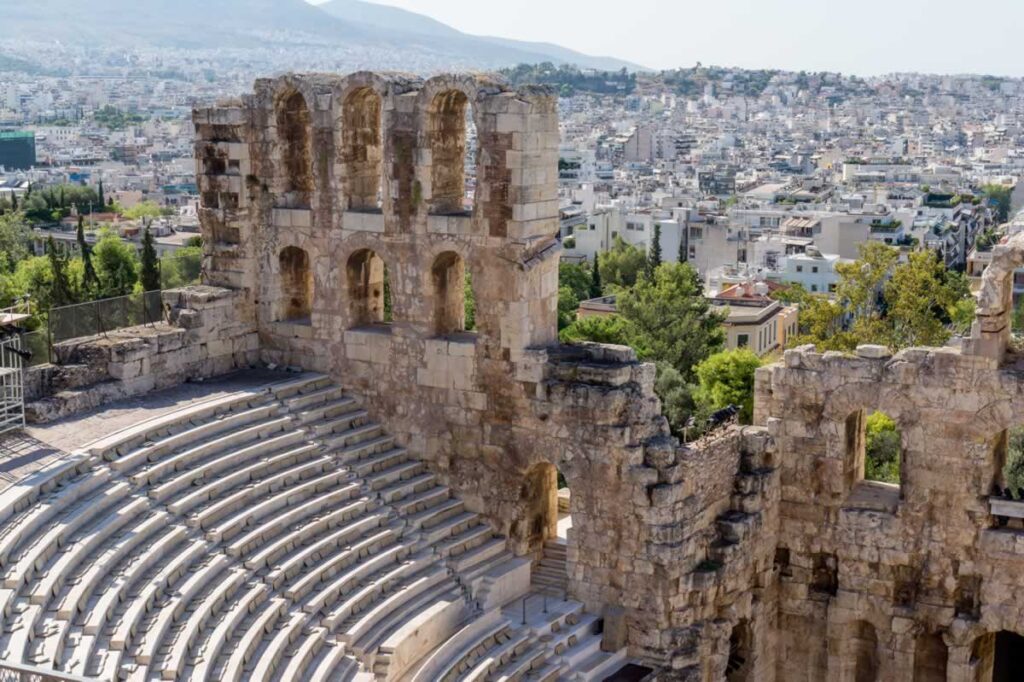
Today, the Odeon is still in active use as a performance venue during the Athens Epidaurus Festival, held every summer between June and August. If your visit overlaps with the festival, attending a concert or theatre performance here is one of the most memorable things you can do in the city. The combination of the ancient stone seating, the Acropolis looming above, and the open night sky makes even a mediocre performance feel extraordinary.
Outside of festival season, the Odeon is not accessible from the inside, but you can see it clearly from the Acropolis walkway and from Dionysiou Areopagitou street below.
3. Philopappos Hill
Philopappos Hill sits directly across from the Acropolis, making it one of the best — and least crowded — spots in Athens for unobstructed views of the Parthenon. Most visitors rush past it on the way to bigger attractions, which works in your favour.
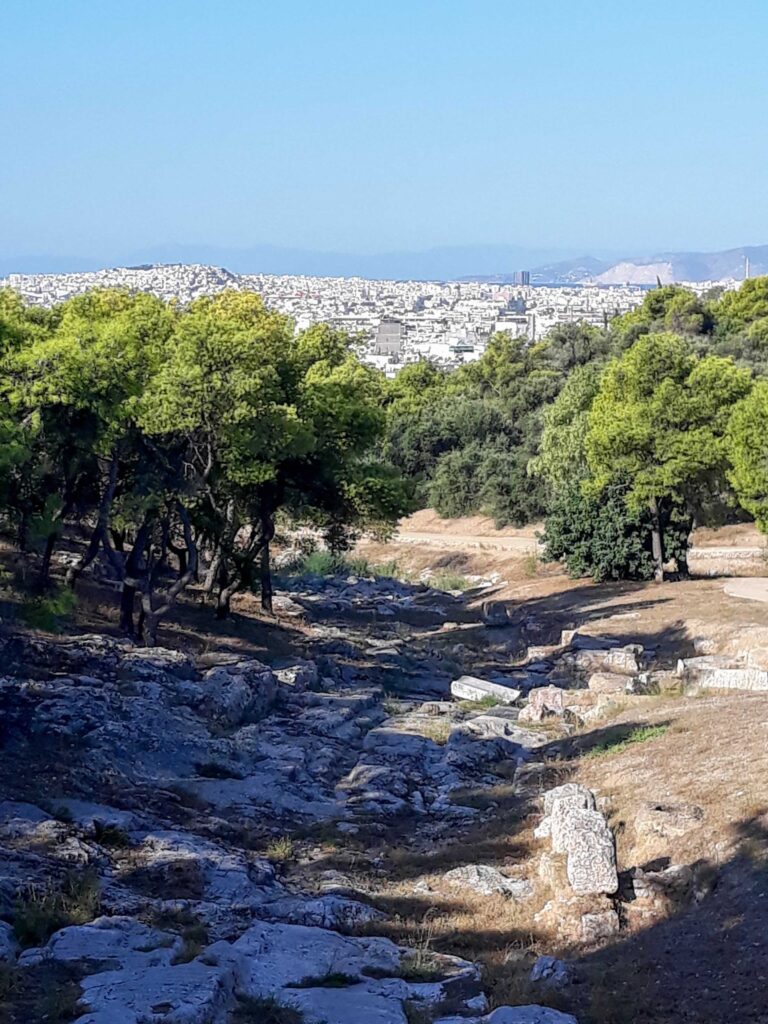
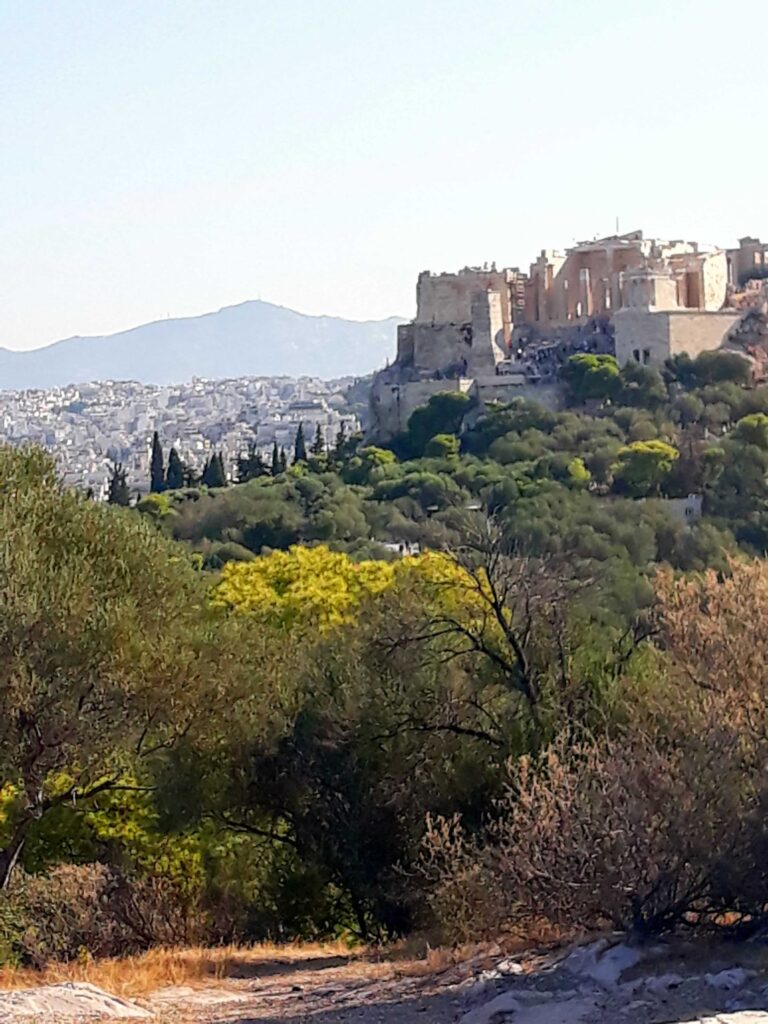
The hill takes its name from the monument at its summit, a funerary monument built between 114 and 116 AD in honour of Gaius Julius Antiochus Philopappos, a Syrian prince and Roman consul. The monument is an interesting ruin in its own right, though the view from the top is the real draw.
The walk up is easy and well-maintained, with shaded paths that wind past the Church of Agios Dimitrios Loumbardiaris and the Cave of Socrates, a rocky hollow traditionally identified as the place where Socrates was imprisoned before his execution, though historians debate the claim.

Go in the early morning or late afternoon to avoid the heat and catch the best light on the Acropolis. Bring water and a camera.
4. Visit the Archaeological Site of Lykeion (Lyceum)
The Lyceum (Lykeion) is the archaeological site of Aristotle’s philosophy school, and the one monument on the Athens combo ticket that most people skip, simply because it sits further from everything else. Don’t. If your feet are giving up, save it for another day rather than cutting it entirely.
To get there, walk through Syntagma Square, continue along Vasilissis Sofias Avenue, and turn onto Rigillis Street. The site entrance is easy to miss, so keep an eye out.
Not much has survived the centuries. What remains are foundations, a peristyle court, and the outline of the Palaestra. But the place has a quiet, understated charm that bigger sites lack, and if you have any interest in philosophy, standing where Aristotle actually taught is worth a few minutes of stillness.
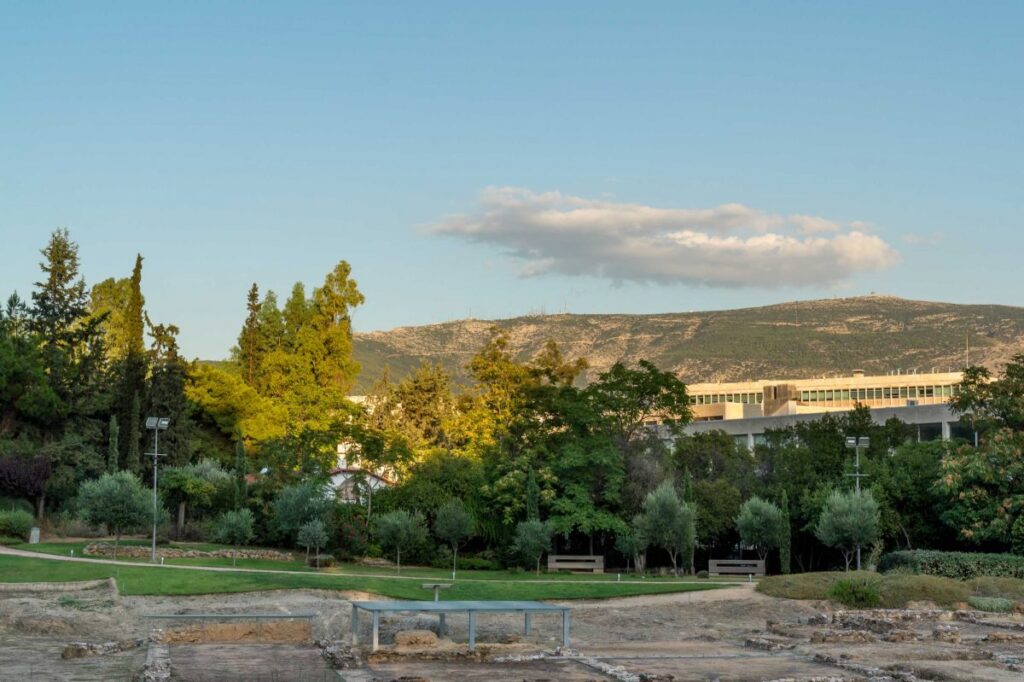
The visit itself takes no more than 10–15 minutes, unless you feel like sitting with your thoughts for a while, which, given the setting, seems entirely appropriate.
5. Anafiotika
Most people wander through Plaka without realizing there’s a hidden village directly above them. Climb a little higher toward the Acropolis and Athens disappears entirely; no traffic, no souvenir shops, no noise.
What you get instead are whitewashed cubic houses, narrow cobblestone alleys, bougainvillea cascading over walls, and cats sleeping in patches of sun.
6. Stavros Niarchos Foundation Cultural Centre (SNFCC)
Athens does ancient history better than almost anywhere on earth, but the Stavros Niarchos Foundation Cultural Centre is a reminder that the city also knows how to do the present.
Designed by Renzo Piano, it houses the Greek National Opera and the National Library of Greece within a complex that holds the distinction of being the first European public structure of its scale to earn LEED Platinum certification.
The site itself, on the Faliro Bay shoreline, 4km south of the city centre, was once a racetrack. Visit their official website to see more photos and to find out their current public events.

By Strange Traveler – https://www.flickr.com/photos/195579022@N08/52035330487/, CC BY-SA 2.0, https://en.wikipedia.org/w/index.php?curid=75589458
7. Cape Sounion & the Temple of Poseidon
If you’re not driving, a guided tour is the most convenient option.
One worth looking at is this organized trip that runs from Athens to Cape Sounion by air-conditioned coach, led by an English-speaking archaeologist. You meet at a central Metro station, and along the way you’ll pass the Athens Riviera coastline and get a proper introduction to the mythology of Poseidon and the site’s history, which is more context than most people get wandering around on their own.
The trade-off is time: organized tours keep to a schedule, so if you want to linger on one of the beaches along the way, you’ll need to make the trip independently.